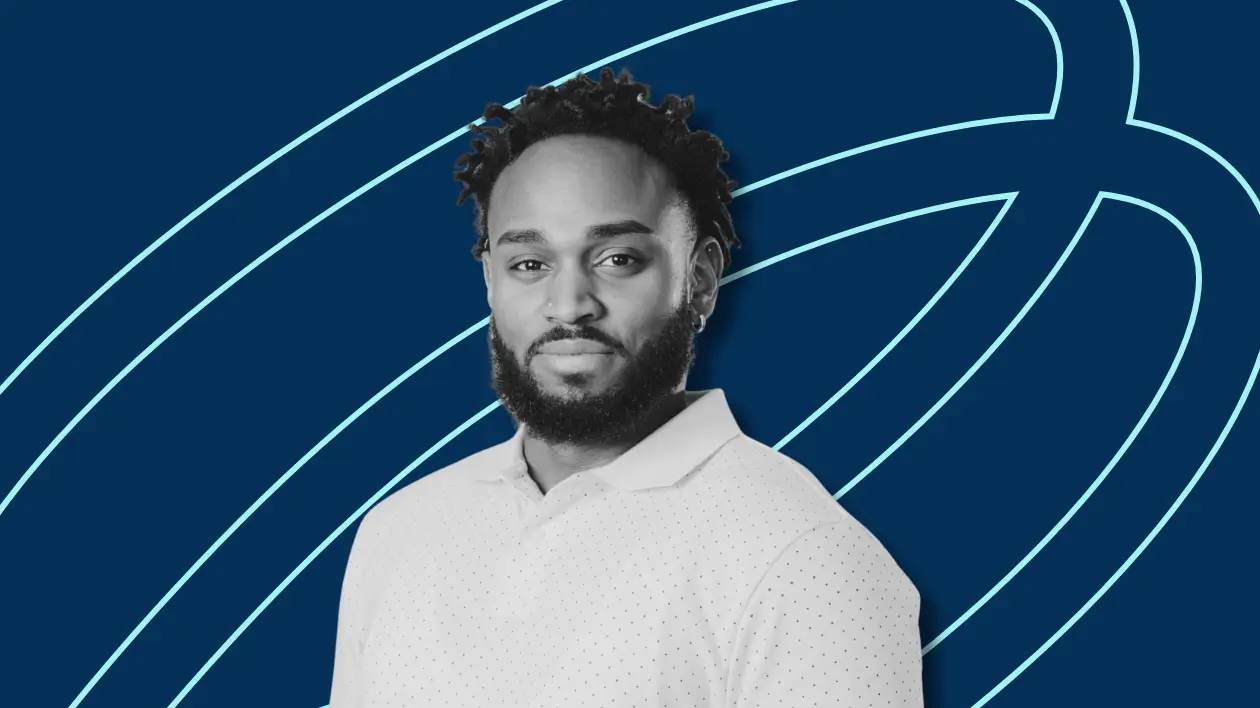
For Zion, success isn't about having every step figured out. It's about staying open to where the next opportunity might lead—and being intentional about what he does with it.
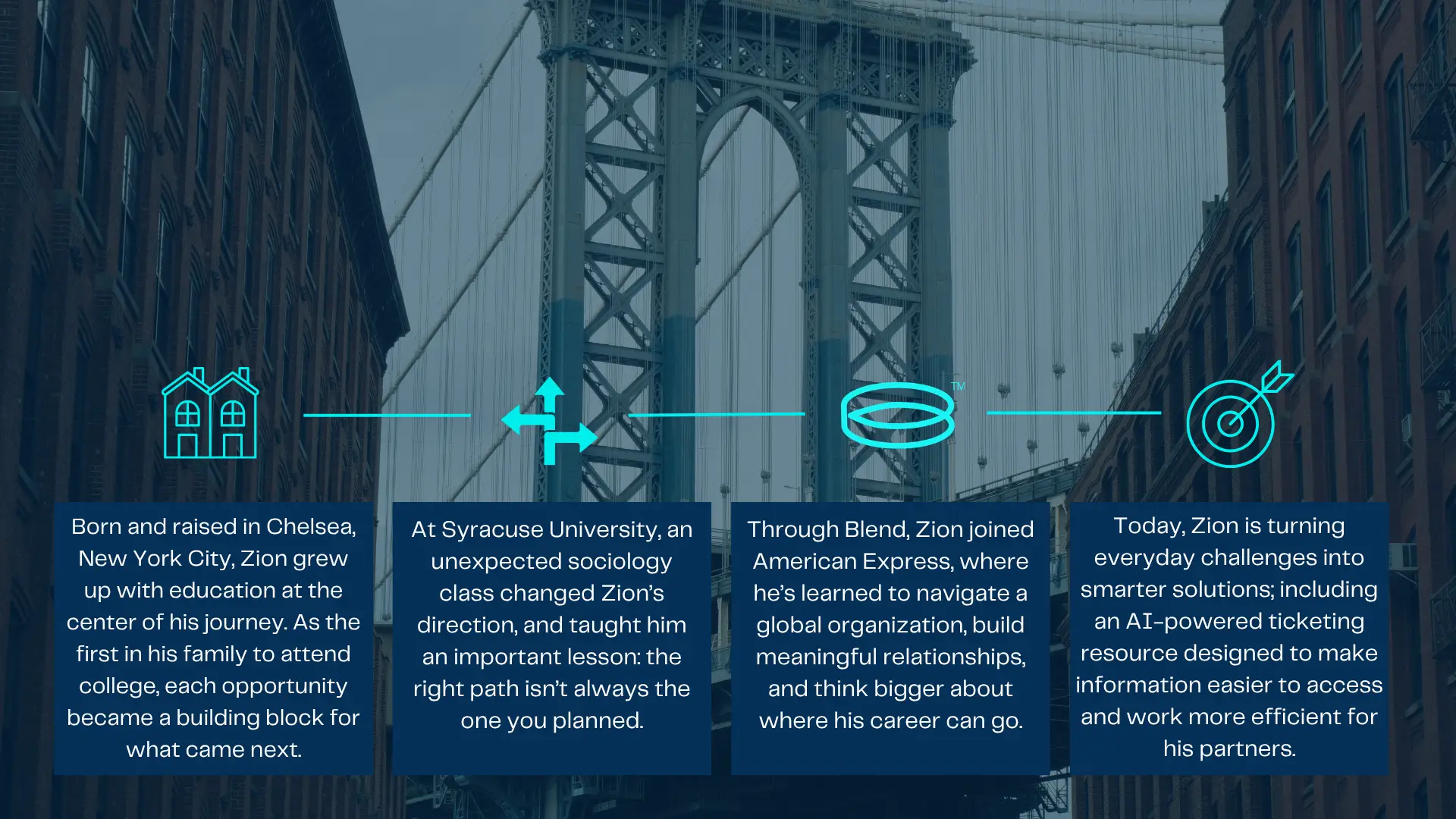
Born and raised in Chelsea, Manhattan, Zion grew up in a single-parent household where education was always a priority. His mother worked hard to give him access to opportunities she hadn't had herself, and from an early age, Zion understood the significance of making the most of them.
That mindset took him from a private middle school in New York City to boarding school in New Jersey, an experience he credits with changing his perspective on education and teaching him structure, accountability, and how to invest in his future.
As the first person in his family to attend college, the next step carried even more meaning.
"Everything was kind of riding on me to make that happen for my family," Zion says. "I took a lot of pride in that."
A full scholarship brought him to Syracuse University, where he initially planned to pursue a career in health and science. Then, during his freshman year, he took a sociology class and discovered something he hadn't expected.
He couldn't stop thinking about it.
"I'd hop on early or stay after late," he remembers. "That was pretty clear to me."
Zion switched his major and graduated in 2024 with a degree in sociology. More importantly, the experience taught him something that continues to shape how he approaches his career today: your path doesn't have to be perfectly planned to take you somewhere meaningful.
"Life is full of twists and turns," he says. "There are so many things you don't think you'll end up doing, so many versions of yourself you don't know yet."
That curiosity eventually led Zion into market research and neuromarketing, where he gained his first corporate experience at a small New York City firm. Working on a lean team meant wearing many hats, taking ownership early, and learning quickly.
It also helped him discover the kind of professional he wanted to become—someone who works hard, stays curious, and looks for opportunities to make an impact.
When changes at his previous company pushed Zion to consider what might come next, his search eventually led him to Blend.
Through Blend, Zion joined American Express as a GCS Ticketing Analyst, supporting ticketing and hospitality initiatives across the organization.
For Zion, the opportunity represented more than a new job. It was a chance to step inside a global organization, learn from experienced leaders, and begin building the next stage of his career.
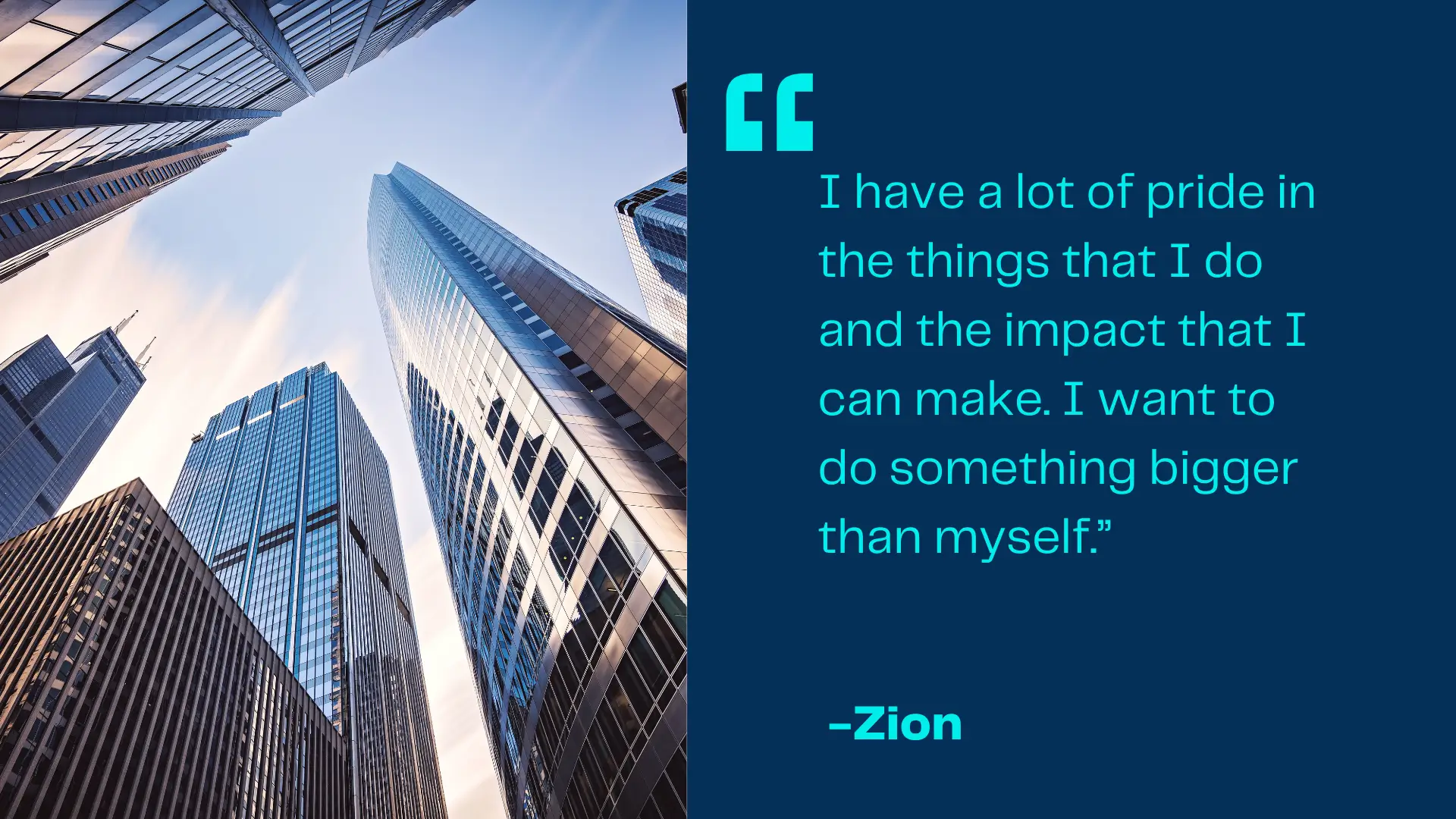
Consulting has given him the opportunity to do exactly that while learning how to navigate an environment very different from the small company where he started his career.
At American Express, projects involve more stakeholders, more collaboration, and sometimes more patience. Zion quickly learned that meaningful work doesn't always produce an immediate, visible result.
"There’s so much patience you need to have," he explains. "You can still be attached to what you've done, but you don't want to be too attached to the point where you feel like you're not making an impact because you're not seeing it move."
What has made that transition especially meaningful is the people around him.
Zion's leader was once a contractor himself and, coincidentally, also attended Syracuse. That shared experience has opened the door to candid conversations about career growth, leadership, and how to navigate a large organization.
For someone early in his career, that guidance has been invaluable.
"You don't leave college knowing how any of this works," Zion says. "It comes with time, attention to detail, patience, direction, guidance, and leadership."
Nearly a year into his assignment, Zion's mindset has already shifted. The question is no longer simply how to succeed in his current role. It's where he can go next.
"I feel like a part of the Amex family," he says. "I see myself here for a long time."
One of Zion's proudest projects started with a simple question: How can we make this easier?
As part of a two-person ticketing team, Zion helps support a high volume of initiatives and stakeholders. Alongside the team's core responsibilities came a steady stream of recurring questions about ticketing policies, guidelines, processes, and procedures.
Zion saw an opportunity to approach the problem differently.
With conversations around AI becoming increasingly common, he began exploring how the technology could give stakeholders faster access to the information they needed while freeing his team to focus on higher-value work.
Working alongside his manager, Zion developed an AI-powered ticketing resource using ChatGPT, bringing together FAQs, policies, guidelines, and other commonly requested information in one place.
But building the tool was only the beginning.
Zion developed a phased approach to determine its purpose, identify its users, test its capabilities, and ensure the information remained secure and compliant. Then he tried to break it.
"I wanted to stress test this," he says. "I wanted to understand all the angles at which people would come at this thing you're giving them."
After gaining leadership support, Zion piloted the resource with a small group of ticketing champions and watched how they incorporated it into their everyday work.
The results were noticeable. Routine questions decreased, stakeholders were able to find answers more independently, and Zion gained time to focus on other projects, professional development, and building relationships across the organization.
Now, he's working on the next iteration, developing a Microsoft Copilot version that can make the resource available to even more users.
For Zion, the project's success isn't just about implementing AI. It's about using innovation to solve a real problem for the people he supports.
"I'm here to make your life easier," he says. "It's important that I'm building resources or tools that make the process easier for our partners—and ultimately easier for the client."
When Zion talks about purpose, ambition, and the person he hopes to become, much of it traces back to one person: his mother.
Growing up, Zion watched her navigate the challenges of raising a child on her own while continually finding ways to give him access to opportunities.
"She gave up parts of her life to ensure that I had better," he says. "I wouldn't be here if it wasn't for that."
Her emphasis on education ultimately helped take Zion to schools and programs that changed the trajectory of his life, culminating in his becoming the first person in his family to attend college.
Today, her example continues to shape the way Zion thinks about success—not simply as something you achieve for yourself, but as something that can create possibilities for others.
That same idea draws him to the stories of founders and innovators. He regularly listens to podcasts about people who have built companies, solved problems, and created something capable of making an impact far beyond themselves.
"We're all a lot more alike than we give ourselves credit for," Zion says. "And we're all capable of a lot more than we recognize."
For Zion, that's the kind of possibility worth chasing.
Outside of work, Zion makes time for the things that keep him grounded.
He's a self-described "gym head," working out four or five times a week, and recently returned to running. He's also deeply creative, making time when he can for poetry, journaling, music, and reading.
But one of the things he values most is simply being around people.
For Zion, connection is an essential part of life—and increasingly, something he tries to protect in a world where it's easy to spend hours looking at a screen.
"There are times where I feel so much more grounded when I'm connected to what's happening around me," he says.
Whether that means spending time with friends, opening a physical book, writing, making music, or getting outside for a run, Zion is learning to be more deliberate about where he puts his attention.
That intentionality is the same quality that has shaped so much of his journey.
At 24, Zion doesn't claim to know exactly where his career will take him. In fact, that's part of what excites him. From Chelsea to Syracuse, from sociology to market research, and now from Blend to American Express, every chapter has expanded his idea of what's possible.
What he does know is the kind of impact he wants to leave behind.
"I'm big on purpose," Zion says. "I'm big on finding my purpose and being purposeful and intentional in the things that I do."
And if his journey so far is any indication, Zion isn't simply waiting to discover what's next. He's building toward it—with purpose.
For Zion, success isn't about having every step figured out. It's about staying open to where the next opportunity might lead—and being intentional about what he does with it.
Born and raised in Chelsea, Manhattan, Zion grew up in a single-parent household where education was always a priority. His mother worked hard to give him access to opportunities she hadn't had herself, and from an early age, Zion understood the significance of making the most of them.
That mindset took him from a private middle school in New York City to boarding school in New Jersey, an experience he credits with changing his perspective on education and teaching him structure, accountability, and how to invest in his future.
As the first person in his family to attend college, the next step carried even more meaning.
"Everything was kind of riding on me to make that happen for my family," Zion says. "I took a lot of pride in that."
A full scholarship brought him to Syracuse University, where he initially planned to pursue a career in health and science. Then, during his freshman year, he took a sociology class and discovered something he hadn't expected.
He couldn't stop thinking about it.
"I'd hop on early or stay after late," he remembers. "That was pretty clear to me."
Zion switched his major and graduated in 2024 with a degree in sociology. More importantly, the experience taught him something that continues to shape how he approaches his career today: your path doesn't have to be perfectly planned to take you somewhere meaningful.
"Life is full of twists and turns," he says. "There are so many things you don't think you'll end up doing, so many versions of yourself you don't know yet."
That curiosity eventually led Zion into market research and neuromarketing, where he gained his first corporate experience at a small New York City firm. Working on a lean team meant wearing many hats, taking ownership early, and learning quickly.
It also helped him discover the kind of professional he wanted to become—someone who works hard, stays curious, and looks for opportunities to make an impact.
When changes at his previous company pushed Zion to consider what might come next, his search eventually led him to Blend.
Through Blend, Zion joined American Express as a GCS Ticketing Analyst, supporting ticketing and hospitality initiatives across the organization.
For Zion, the opportunity represented more than a new job. It was a chance to step inside a global organization, learn from experienced leaders, and begin building the next stage of his career.
Consulting has given him the opportunity to do exactly that while learning how to navigate an environment very different from the small company where he started his career.
At American Express, projects involve more stakeholders, more collaboration, and sometimes more patience. Zion quickly learned that meaningful work doesn't always produce an immediate, visible result.
"There’s so much patience you need to have," he explains. "You can still be attached to what you've done, but you don't want to be too attached to the point where you feel like you're not making an impact because you're not seeing it move."
What has made that transition especially meaningful is the people around him.
Zion's leader was once a contractor himself and, coincidentally, also attended Syracuse. That shared experience has opened the door to candid conversations about career growth, leadership, and how to navigate a large organization.
For someone early in his career, that guidance has been invaluable.
"You don't leave college knowing how any of this works," Zion says. "It comes with time, attention to detail, patience, direction, guidance, and leadership."
Nearly a year into his assignment, Zion's mindset has already shifted. The question is no longer simply how to succeed in his current role. It's where he can go next.
"I feel like a part of the Amex family," he says. "I see myself here for a long time."
One of Zion's proudest projects started with a simple question: How can we make this easier?
As part of a two-person ticketing team, Zion helps support a high volume of initiatives and stakeholders. Alongside the team's core responsibilities came a steady stream of recurring questions about ticketing policies, guidelines, processes, and procedures.
Zion saw an opportunity to approach the problem differently.
With conversations around AI becoming increasingly common, he began exploring how the technology could give stakeholders faster access to the information they needed while freeing his team to focus on higher-value work.
Working alongside his manager, Zion developed an AI-powered ticketing resource using ChatGPT, bringing together FAQs, policies, guidelines, and other commonly requested information in one place.
But building the tool was only the beginning.
Zion developed a phased approach to determine its purpose, identify its users, test its capabilities, and ensure the information remained secure and compliant. Then he tried to break it.
"I wanted to stress test this," he says. "I wanted to understand all the angles at which people would come at this thing you're giving them."
After gaining leadership support, Zion piloted the resource with a small group of ticketing champions and watched how they incorporated it into their everyday work.
The results were noticeable. Routine questions decreased, stakeholders were able to find answers more independently, and Zion gained time to focus on other projects, professional development, and building relationships across the organization.
Now, he's working on the next iteration, developing a Microsoft Copilot version that can make the resource available to even more users.
For Zion, the project's success isn't just about implementing AI. It's about using innovation to solve a real problem for the people he supports.
"I'm here to make your life easier," he says. "It's important that I'm building resources or tools that make the process easier for our partners—and ultimately easier for the client."
When Zion talks about purpose, ambition, and the person he hopes to become, much of it traces back to one person: his mother.
Growing up, Zion watched her navigate the challenges of raising a child on her own while continually finding ways to give him access to opportunities.
"She gave up parts of her life to ensure that I had better," he says. "I wouldn't be here if it wasn't for that."
Her emphasis on education ultimately helped take Zion to schools and programs that changed the trajectory of his life, culminating in his becoming the first person in his family to attend college.
Today, her example continues to shape the way Zion thinks about success—not simply as something you achieve for yourself, but as something that can create possibilities for others.
That same idea draws him to the stories of founders and innovators. He regularly listens to podcasts about people who have built companies, solved problems, and created something capable of making an impact far beyond themselves.
"We're all a lot more alike than we give ourselves credit for," Zion says. "And we're all capable of a lot more than we recognize."
For Zion, that's the kind of possibility worth chasing.
Outside of work, Zion makes time for the things that keep him grounded.
He's a self-described "gym head," working out four or five times a week, and recently returned to running. He's also deeply creative, making time when he can for poetry, journaling, music, and reading.
But one of the things he values most is simply being around people.
For Zion, connection is an essential part of life—and increasingly, something he tries to protect in a world where it's easy to spend hours looking at a screen.
"There are times where I feel so much more grounded when I'm connected to what's happening around me," he says.
Whether that means spending time with friends, opening a physical book, writing, making music, or getting outside for a run, Zion is learning to be more deliberate about where he puts his attention.
That intentionality is the same quality that has shaped so much of his journey.
At 24, Zion doesn't claim to know exactly where his career will take him. In fact, that's part of what excites him. From Chelsea to Syracuse, from sociology to market research, and now from Blend to American Express, every chapter has expanded his idea of what's possible.
What he does know is the kind of impact he wants to leave behind.
"I'm big on purpose," Zion says. "I'm big on finding my purpose and being purposeful and intentional in the things that I do."
And if his journey so far is any indication, Zion isn't simply waiting to discover what's next. He's building toward it—with purpose.